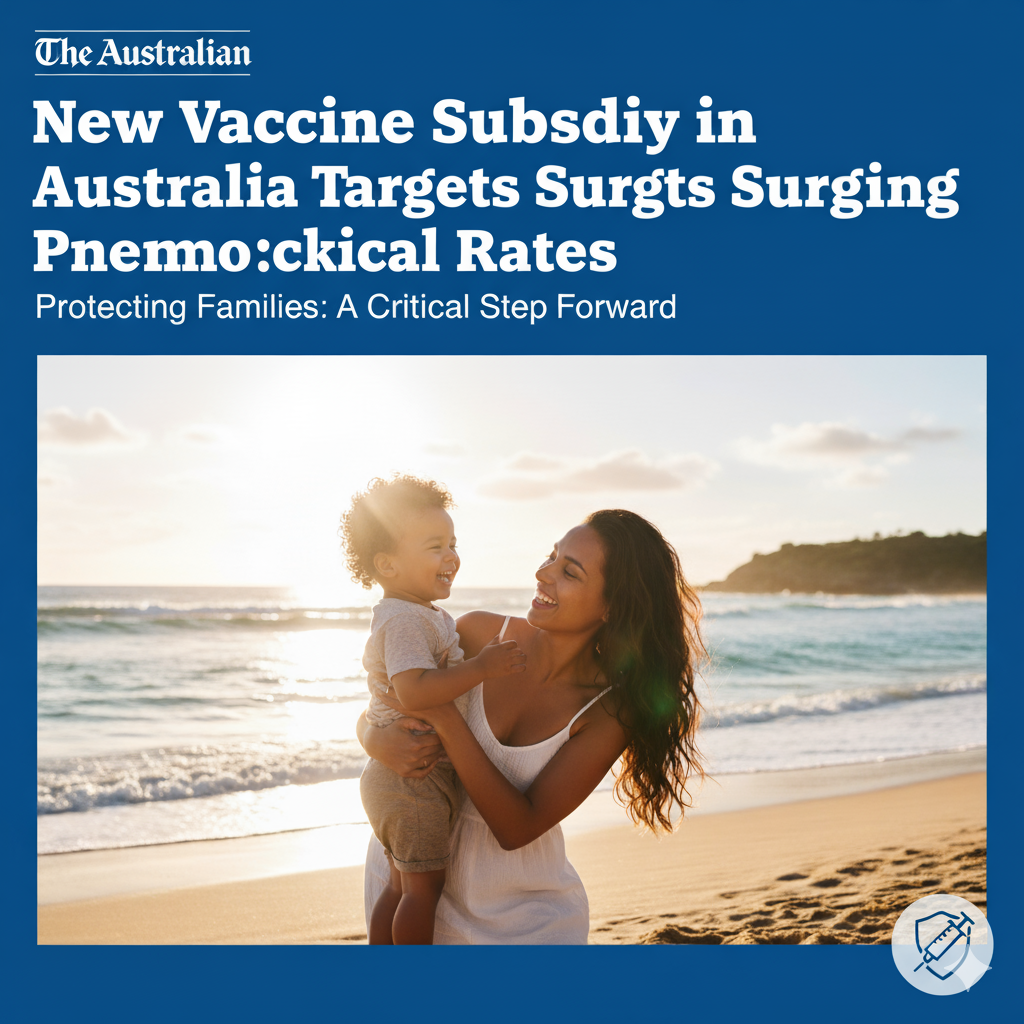
In a significant move to safeguard public health, the Australian government has introduced a new vaccine subsidy to combat the rising incidence of pneumococcal disease, a bacterial infection caused by Streptococcus pneumoniae. The announcement, made by The Australian on September 2, 2025, features a heartwarming image of a mother and child on a beach, symbolizing the protection this initiative aims to offer families. With pneumococcal disease posing a serious threat—particularly to young children and the elderly—this subsidy marks a critical step forward in an ongoing battle against a preventable yet potentially deadly illness.
The Rising Threat of Pneumococcal Disease
- Pneumococcal disease encompasses a range of conditions, including pneumonia, bloodstream infections, and meningitis, which can lead to severe complications or death if untreated. According to the latest data from the Australian Immunisation Handbook (updated August 2025), the bacterium exhibits a 0.4-2% resistance to penicillin, but resistance to other antibiotics exceeds 15% in some strains. This growing antibiotic resistance highlights the urgent need for effective vaccination strategies to curb the spread and severity of the disease.
- Historically, pneumococcal disease has disproportionately affected vulnerable populations. The introduction of the 7-valent pneumococcal conjugate vaccine (7vPCV) in 2005 under the National Immunisation Program (NIP) marked a turning point, leading to a significant decline in invasive pneumococcal disease (IPD) rates across all age groups. Surveillance data from the Handbook indicates that this decline was particularly pronounced among children under five, demonstrating the power of widespread immunization.
A New Subsidy to Strengthen Protection
The newly authorized vaccination methods, as reported by The Australian, respond to years of advocacy from heartbroken parents who have witnessed the toll of surging pneumococcal rates. The subsidy expands access to updated vaccines, building on the existing framework that provides free pneumococcal vaccines to all children at 2, 4, and 12 months, with an additional dose at 6 months for Aboriginal and Torres Strait Islander children and those with specific medical risk conditions. For adults, particularly the elderly, the program includes vaccines like Prevenar 13 (13vPCV) and Pneumovax 23 (23vPPV), with interim recommendations for newer extended-valency options like Vaxneuvance (15vPCV) and Prevenar 20 (20vPCV), though these are not yet NIP-funded.
The Australian Government Department of Health, Disability and Ageing emphasizes that vaccination remains the safest and most effective way to protect against pneumococcal disease. This initiative aligns with global efforts, as evidenced by the U.S. Centers for Disease Control and Prevention (CDC), which notes that pneumococcal vaccines significantly reduce the risk of invasive disease, though they cannot prevent all cases.
Addressing Public Skepticism
The announcement has sparked varied reactions on social media, with some users questioning the efficacy and necessity of vaccines. Comments on the The Australian post, such as “But has anyone actually tested if the vaccine works?” and sarcastic remarks about historical health without modern medicine, reflect a segment of public skepticism. However, scientific evidence counters these concerns. A 2021 study published in The Lancet Infectious Diseases found that PCV13 and PCV15 vaccines reduced invasive pneumococcal disease by 60-75% in vaccinated populations, validating their effectiveness. Side effects are typically mild and transient, with serious reactions being rare, as confirmed by the CDC.
Critics, including those referencing figures like Dr. Anthony Fauci and Bill Gates, argue that reliance on vaccines undermines natural immunity. Yet, historical data shows that pre-vaccine eras were marked by higher mortality rates from infectious diseases, a fact often overlooked in anti-vaccine narratives. The success of the 7vPCV rollout in Australia serves as a testament to the life-saving potential of immunization programs.
Looking Ahead
As Australia rolls out this new subsidy, the focus will be on ensuring equitable access and addressing vaccine hesitancy through education. The government’s commitment to reviewing the optimal vaccination program for adults further signals a proactive approach to adapting to emerging health challenges. For parents and caregivers, the message is clear: vaccination offers a proven shield against a disease that has left too many families grieving.
For more information, consult the Australian Immunisation Handbook or speak with a healthcare provider about eligibility and scheduling. As the nation moves forward, this initiative stands as a beacon of hope, blending scientific advancement with compassionate policy to protect its youngest and most vulnerable citizens.