
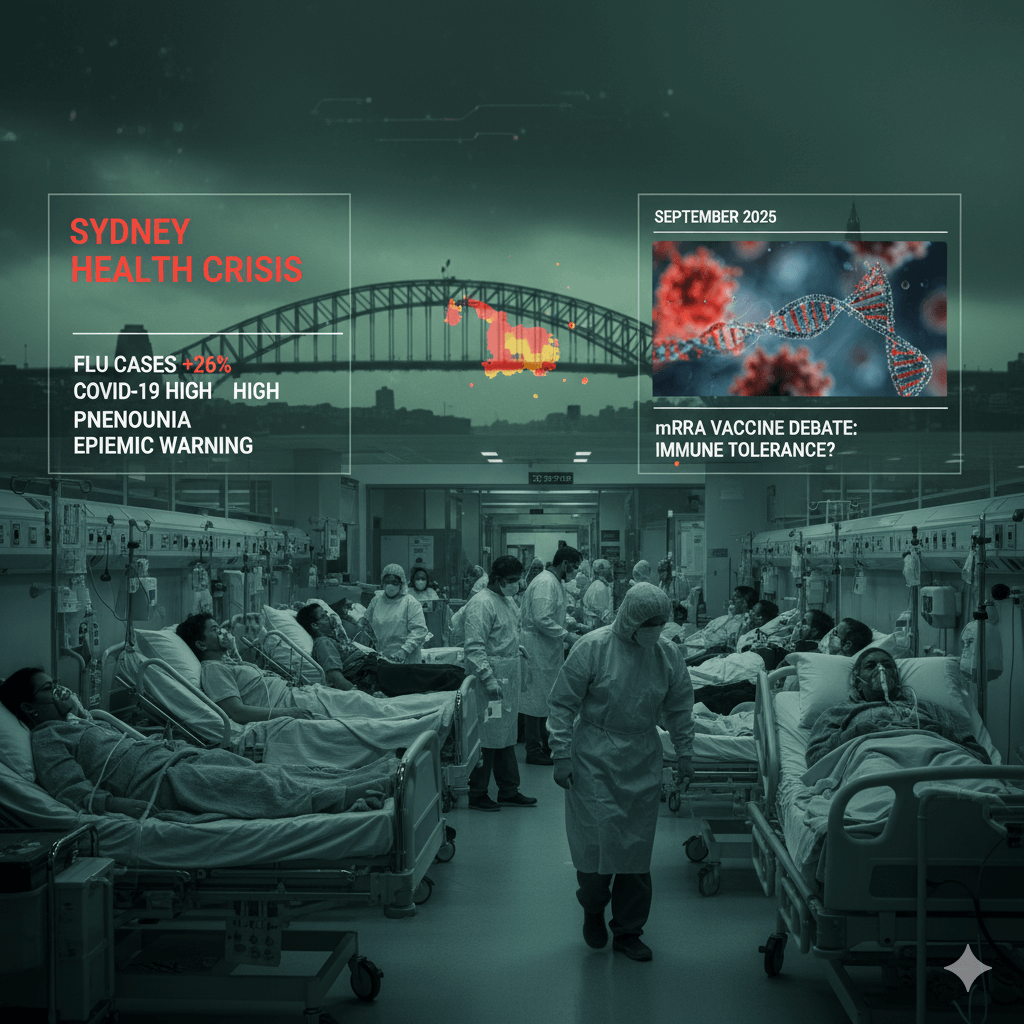
Sydney is grappling with a significant health crisis as new figures reveal a dramatic spike in flu cases, with COVID-19 levels remaining stubbornly high. Over the past week, flu test confirmations have surged by 26%, with nearly 7,000 people testing positive. This increase has raised concerns about the potential onset of a pneumonia epidemic, a development that health authorities are closely monitoring.
The surge in respiratory illnesses is not uniform across the city. Western and South Western Sydney are bearing the brunt, with 1,729 and 1,307 influenza cases respectively, accounting for almost half of the total. Similarly, COVID-19 infections are most prevalent in these areas, with 833 cases in Western Sydney and 727 in South Western Sydney, closely followed by Northern Sydney with 732 cases. This regional disparity underscores the varying impact of the health crisis across different parts of the city.
Health experts are particularly alarmed by the rise in pneumonia cases, which have shown a marked increase over the past six months. Data indicates that pneumonia hospitalizations are on the rise across all age groups, suggesting an epidemic that typically occurs every three to five years. Authorities are urging residents to practice good hygiene and stay home if unwell to mitigate the spread of these respiratory diseases.
The situation is further complicated by ongoing debates about the long-term effects of mRNA vaccines. Some studies suggest that repeated vaccinations may lead to an increase in IgG4 antibodies, potentially causing immune tolerance to the SARS-CoV-2 spike protein. This could increase susceptibility to infections, a concern that adds another layer of complexity to the current health landscape in Sydney.
As the city navigates this challenging period, the focus remains on public health measures and community resilience. The coming weeks will be critical in determining the trajectory of these interconnected health challenges and the effectiveness of the response strategies in place.