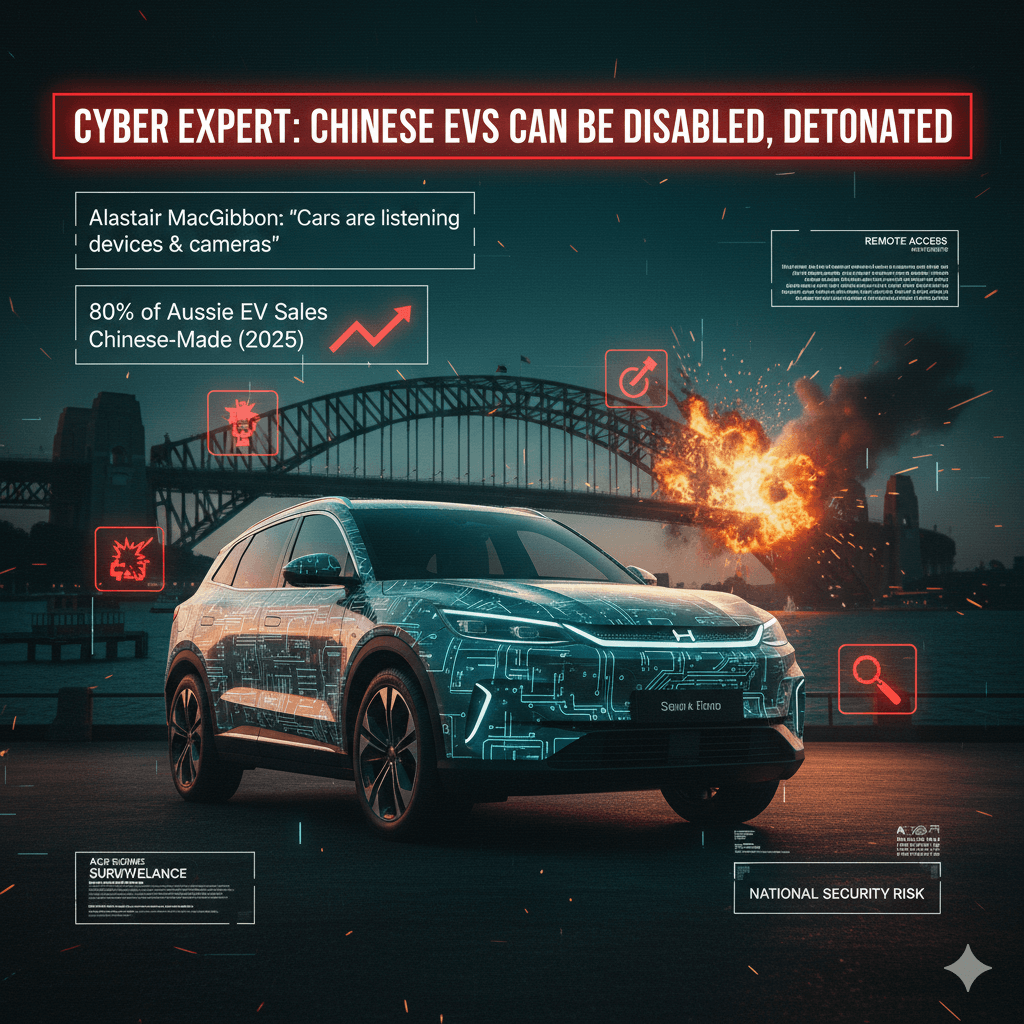
SYDNEY, September 17, 2025 – A top Australian cybersecurity expert has raised alarm bells, claiming Chinese-made electric vehicles (EVs) on Aussie roads could be remotely disabled or even detonated. Alastair MacGibbon, former cybersecurity adviser to ex-Prime Minister Malcolm Turnbull, made the startling assertion at the Financial Review’s Cyber Summit on Tuesday. He warned that these internet-connected cars might double as surveillance tools controlled by China.
MacGibbon, now chief strategy officer at CyberCX, painted a grim picture of national security risks. He suggested that safety features in EVs and household devices like batteries could be switched off remotely, potentially causing chaos. “Those cars are listening devices and cameras,” he said, urging public officials to steer clear of Chinese-made vehicles until the threat is assessed.
The warning comes as Chinese EVs flood the Australian market, making up 80% of EV sales in 2025. Brands like BYD have surged, overtaking Mitsubishi to become the sixth best-selling car brand last month. However, with affordability driving demand, experts are now questioning the hidden costs of relying on foreign technology.
Calls for Action Amid Growing Global Concerns
The claims echo international unease about Chinese tech. In 2024, the U.S. proposed banning Chinese vehicle imports over similar safety fears, while a 2025 Swedish study highlighted cellular IoT modules in EVs as potential vulnerabilities. In Australia, Nationals MP Barnaby Joyce has backed the concerns, pointing to the risks of software updates being exploited by a “totalitarian state.”
One Nation has also jumped into the fray, calling for urgent government action. The party warns that unchecked imports could undermine national security and fair competition, given the subsidies propping up Chinese EV makers. They’re pushing for tighter regulations to safeguard Aussie drivers and markets.
Despite the hype, no concrete evidence has surfaced to prove these vehicles can be weaponised. The Australian Strategic Policy Institute’s 2023 report on foreign tech risks adds weight to the debate, but experts are divided. Some argue for an independent probe to separate fact from fear, especially as EV adoption accelerates.
What’s Next for Aussie Drivers?
The federal government faces pressure to review its stance on Chinese EVs, reminiscent of the 2018 ban on high-risk 5G vendors. Home Affairs Minister Tony Burke has already taken precautions with his own Chinese-made EV, avoiding data harvesting risks like geolocation tracking. Yet, with over 20,000 Chinese vehicles sold in August alone, the issue is hitting close to home.
Aussie drivers are left wondering whether their next car could be a Trojan horse. As the debate heats up, calls for transparency and safety checks grow louder. Until then, MacGibbon’s chilling claim hangs over the booming EV market, urging a closer look at what’s under the bonnet.